
The Complete Guide to Contemporary Surgical Instruments Used in Medical Facilities
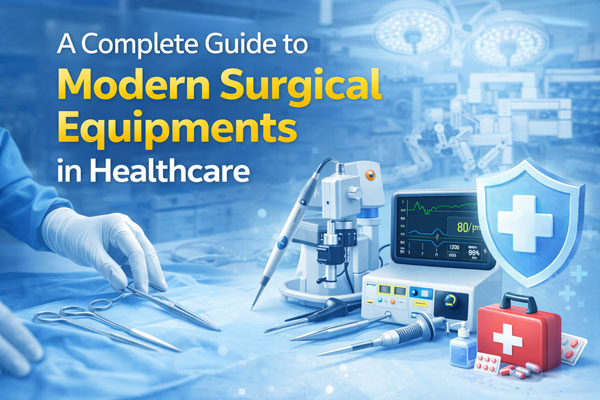
The healthcare system of 2026 relies on advanced surgical technology to ensure that physicians have a safe and accurate medical solution that works with maximum efficiency. The increasing use of surgical technology in hospitals has become an essential aspect of hospitals because medical procedures require specialized equipment for their implementation. Modern surgical technology enables surgeons to achieve greater accuracy and reduce complications, leading to improved results for patients during the recovery process. Healthcare facilities decide to improve their surgical facilities because they require greater protection for patients, better control of infections, and greater productivity through procedures that satisfy international medical standards and prevailing medical practices.
What Are Surgical Equipments and Why They Matter
Surgical equipment encompasses all tools, devices, and machines that medical professionals require to conduct surgical operations. The equipment includes simple hand tools and sophisticated electronic systems that use imaging technology. The primary function of these devices is to provide surgeons with the essential tools needed to execute their tasks while decreasing the amount of harm done to patients.
Surgical procedures require dependable instruments that help maintain sterile conditions, ensure consistent execution of medical tasks, and lead to successful surgical results. The efficient operation of hospitals and clinics during both emergencies and scheduled operations depends on their ability to utilize properly designed medical equipment.
Types of Modern Surgical Equipments
Various surgical tools exist for hospitals because different medical specialties and surgical methods require different equipment. The main equipment categories include:
- General surgical instruments such as forceps, scissors, and retractors
- Electrosurgical units are used for cutting and coagulation
- Laparoscopic and minimally invasive tools for reduced incision surgeries
- Anesthesia machines for controlled sedation and patient safety
- Operating tables and surgical lights for optimal positioning and visibility
The distinct piece of equipment maximizes the surgical precision and safety, as well as enhances the efficiency of the operating theatre.
How Do Modern Surgical Instruments Work?
Surgeons use contemporary surgical instruments that combine mechanical components with modern technological features. Surgeons use manual instruments to control their tools, while electronic systems and automated systems deliver exact measurement abilities and stable operating conditions. Electrosurgical instruments enable surgeons to perform tissue cuts through the use of electrical energy, while laparoscopic instruments enable surgeons to perform their duties through the use of small incisions and a camera. The two systems combine to reduce the time taken during surgery and the risks of infection.
Applications Across Healthcare Settings
Modern surgical equipment is used in various healthcare facilities, which include:
- - Multi-specialty hospitals
- - Surgical centers and operating theatres
- - Trauma and emergency care units
- - Teaching hospitals and medical institutes
The different departments, which include orthopedics, cardiology, general surgery, and gynecology, require their specific surgical instruments, which are designed for their medical purposes. The modern equipment design allows hospitals with high patient volumes to use essential equipment.
Safety Standards and Compliance
Safety standards determine how surgical equipment should be developed and operated. The standards require devices to fulfill standards about material quality, electrical safety, sterility, and performance reliability.
Healthcare facilities follow national and international medical guidelines, which include recommendations from organizations such as the World Health Organization to protect patient safety. The operational compliance of surgical facilities needs regular inspections, together with equipment calibration and maintenance activities.
How to Choose the Right Surgical Equipments
Surgical equipment selection requires hospitals to assess their medical specialization and expected procedure volume, and their available infrastructure and required regulatory compliance. Hospitals need to evaluate three factors, which include equipment usability and maintenance requirements, and system compatibility with their current equipment.
Hospitals should assess three main criteria when choosing surgical equipment, which include equipment performance, product safety, and technical assistance. Healthcare providers who make smart equipment choices will achieve their operational objectives while delivering top-quality medical services.
Conclusion
Current medical procedures depend on modern surgical equipment, which provides three essential benefits through its accurate execution of procedures, its capability to enhance safety, and its function of delivering better patient outcomes. The development of medical practice demands dependable and well-engineered surgical instruments for its essential tasks.
Healthcare providers can use their knowledge of equipment types and applications and safety requirements to make decisions that will enhance surgical results and build patient confidence. The implementation of advanced surgical equipment leads to increased safety during operations and improves overall healthcare system efficiency.
Recent Posts
-

Top Surgical Mask Suppliers for Hospitals and Medical Stores
February 25, 2026 -
Trusted OT Tables Suppliers for Modern Surgical Excellence
February 25, 2026